
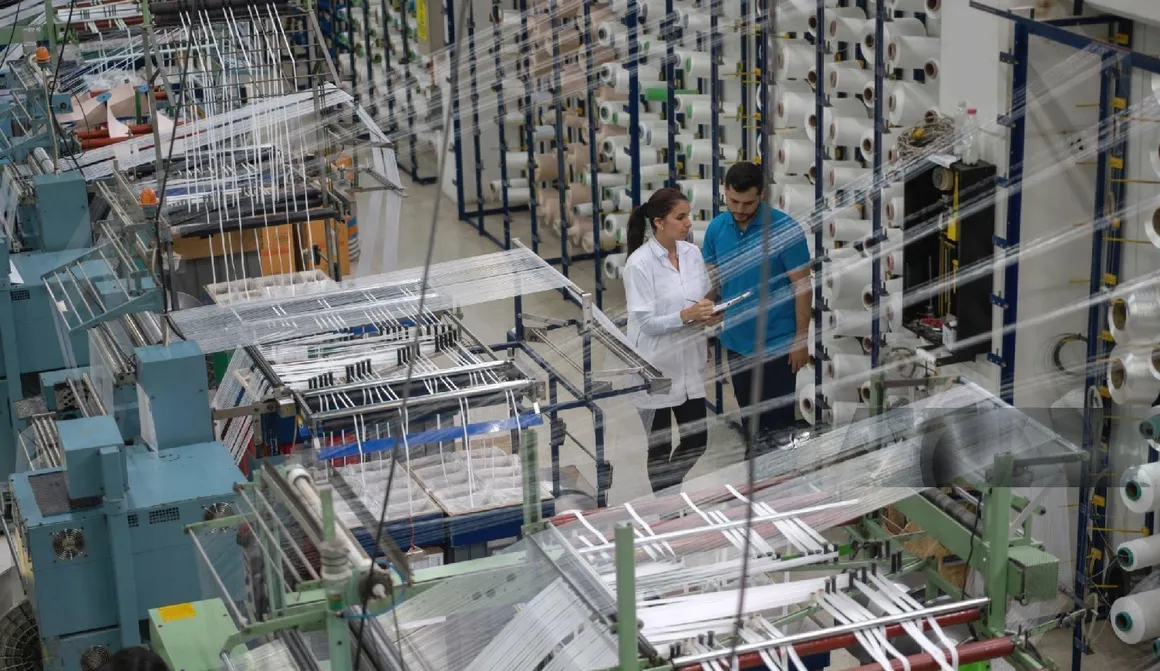
The average American will throw away roughly 81 pounds of clothing per year, and 85% of those recyclable textiles are dumped in landfills. With a new wave of spring cleaning and fast fashion trends, the world is entering a season of closet purging. Textile Circularity is tackling this growing waste crisis by helping institutions recycle textiles at the source and keep them out of landfills.
These statistics were alarming to Yussuf Kappaya, MBA ‘23, founder of Textile Circularity, a company committed to helping institutions address textile waste at the source by offering no-cost recycling services.
Prior to his MBA, Kappaya was a co-founder at Canadian American Clothing, a textile recycling startup with 65 employees, that processed roughly 12 million pounds of textiles annually and exported to more than fifteen countries.
Kappaya joined the Johnson Summer Startup Accelerator (JSSA) late into his MBA, using the time to figure out his path – continuing his work with startups or moving to the corporate sphere.
“I sat down with my mentor, and I was like, hey, have this really pointy skill, like, I’ve done this thing that no one else has really done”, said Kappaya.
The initial brainchild of Textile Circularity was setting up textile recycling collection bins in condo buildings.
“And if you say, like, well, 10% of my city’s population lives there then, and every person kind of throws away maybe 60 to 80 pounds per year of clothing that could be a great way to divert textile waste.”
Through the Johnson Summer Startup Accelerator, Kappaya was pushed to think bigger. The program connected him with companies, retailers, and waste management firms, helping him identify a stronger product market fit and evolve the business into a scalable service for the textile sector, a service he was happy to provide to the textile sector.
Kappaya’s JSSA mentor, Aaron Proujansky, encouraged him to expand his vision, directing him to different companies, providing him with the model to take his ideas further.
Since JSSA, Kappaya has deepened his understanding of the textile disposal process, particularly how retailers manage unsold or unusable goods. Textile Circularity now partners with companies that prefer to recycle excess textiles rather than send them to already overflowing landfills.
The company focuses on circular, end use fiber to fiber recycling. Meaning they collect materials to be rewoven into new textiles, debrand fabrics, reclaim usable fibers, or repurpose absorbent materials into wiping cloths.
Textile Circularity provides these services at no cost. As a mission-oriented startup, its goal is to remove barriers to textile recycling and make it easier for companies to choose reuse over disposal, ultimately reducing the need for new material production and lowering emissions.
Through its partnership with 1% for the Planet, Textile Circularity extends its environmental impact even further. Members of 1% for the Planet commit to donating at least 1% of annual sales to environmental organizations.
Textile Circularity and Kappaya have made significant strides toward a more sustainable future for textiles, with that growth accelerated by participation in the Johnson Summer Startup Accelerator. The program helped turn an initial idea into a scalable solution, demonstrating how JSSA can shape mission driven companies with real world impact. The 2026 JSSA cohort is now kicking off their program, with sights set on making a difference just like Textile Circularity.


