

Cornell University’s Life Sciences Technology Innovation Fellows (LSTIF) program culminated April 18 at a showcase in New York City, where interdisciplinary teams pitched their startup concepts to peers and supporters.
The showcase followed two semesters of workshops, courses, and business development aimed at educating the next generation of C-suite life sciences startup leaders. Teams comprised of graduate business students and life sciences researchers spent the academic year exploring a business opportunity behind the researchers’ discoveries in health, pharmacology, medtech, biotech, veterinary tech, and molecular bioscience.
“The LSTIF program has been a transformative experience, providing me with valuable insights into how startups are built and grown,” said Julia Donlevie, Ph.D. ’28. “It deepened my appreciation for my research by allowing me to explore its real-world impact and engage directly with potential customers and users of my technology.”
The program’s 2025-26 cohort paired 18 graduate business students with 18 researchers from Cornell and its Tri-Institutional Partners, Memorial Sloan Kettering Cancer Center (MSK) and Rockefeller University. With guidance from experienced entrepreneurs, investors, industry experts, and faculty, teams designed 13 startups.
“The LSTIF program was both a humbling and inspiring experience,” said Priyanka Bodhe, MHA ’26. “Throughout the program, engaging with mentors, industry experts, and fellow innovators challenged us to think critically about our business model, while learning from others pushed us to grow as entrepreneurs and refine our vision.”
The entrepreneurs presented their business plans at the showcase, held at Cornell’s 570 Lexington Avenue space in midtown Manhattan:
- PinPoint Therapeutics (Erik Bidstrup, Ph.D. ’26; Carina D’souza, MBA ’26; Daniel Lamm, Ph.D. ’26) – next-generation binders for improved oncology outcomes, starting with prostate cancer treatment.
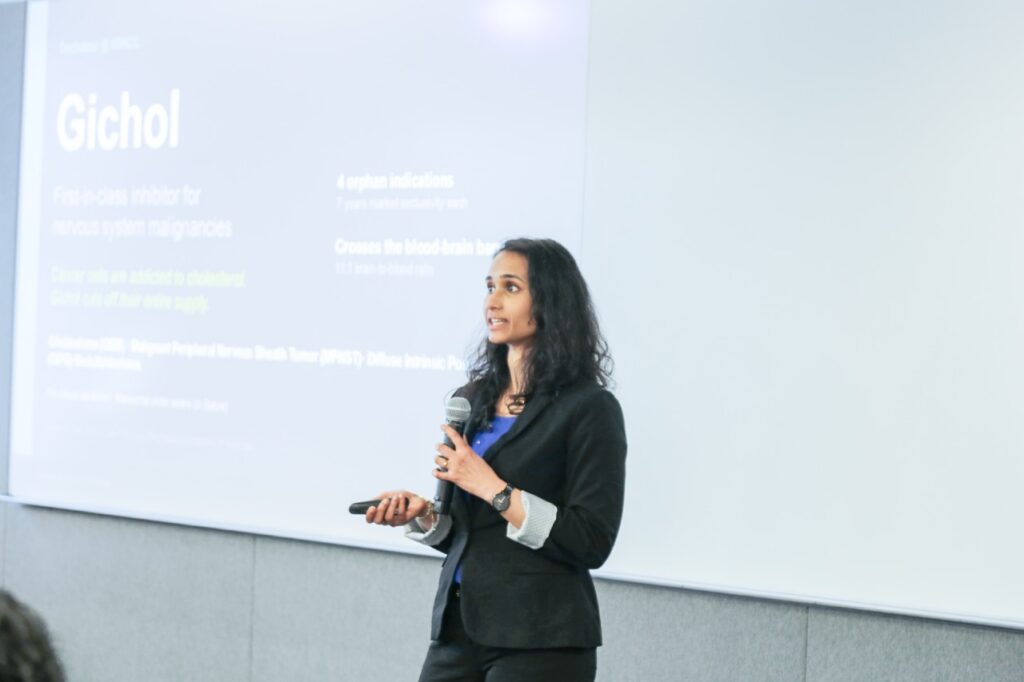
- Gichol (Swathi Iyer, postdoctoral researcher at MSK) – first-in-class inhibitor that starves tumors of the nutrients they depend on to grow.
- PreClinIQ (Priyanka Bodhe, MHA ’26; Samsara Upadhya, Ph.D. ’26) – platform using live-cell imaging with custom reporters for better drug candidate testing.
- Bemmune (Raveena Kumari, MBA ’26; Rajat Punia, postdoctoral researcher; Shah Reza Bin Md Salih, MBA/MS ’26) – vaccine discovery for highly mutating pathogens, starting with Hepatitis C.
- Male Contraception (Jelena Lujic, research associate; Carmyn Polk, MBA ’26) – non-hormonal male contraception.
- CasDX (Benedict Ho, MD-MBA ’27; Medi Tolou, MD-MBA ’28; Ruisi (Rose) Wang, postdoctoral researcher at Rockefeller University) – CRISPR-based at-home, rapid STD testing.
- IV-Electronics (Amirhossein Favakeh, Ph.D. ’26) – objective, label-free electrical screening for IVF decisions.
- BEST (Jiawei (Azalea) Yang, Ph.D. ’27; Robert Plovnick, MBA/MS ’26; Kumar Yugandhar, postdoctoral researcher) – engineered gut bacteria to treat inflammatory bowel disease (IBD).
- Gut Check (Jeshrene Enerio, MBA ’26; Miranda Lewis, postdoctoral researcher at MSK; Nayancie Matthews, MBA ’26) – platform providing microbiome-driven dietary and lifestyle insights to improve IBD patient outcomes.
- FurSure Diagnostics (Danni Tang, Ph.D. ’ 26; Fumei Cerecino, MBA/MS ’26; Jessica Noll, postdoctoral researcher) – rapid testing technology for veterinary diagnostics, starting with feline infectious peritonitis.
- RegeNova (Blake Fan, MBA ’26; Shuran Wang, Ph.D. ’27; Zifan Nie, MBA ’26) – regenerative therapy for vitiligo.
- Acolite (Chi-Lam Poon, Ph.D. ’27; Coco Qu, MBA ’26) – AI platform for genomic sequencing technology development.
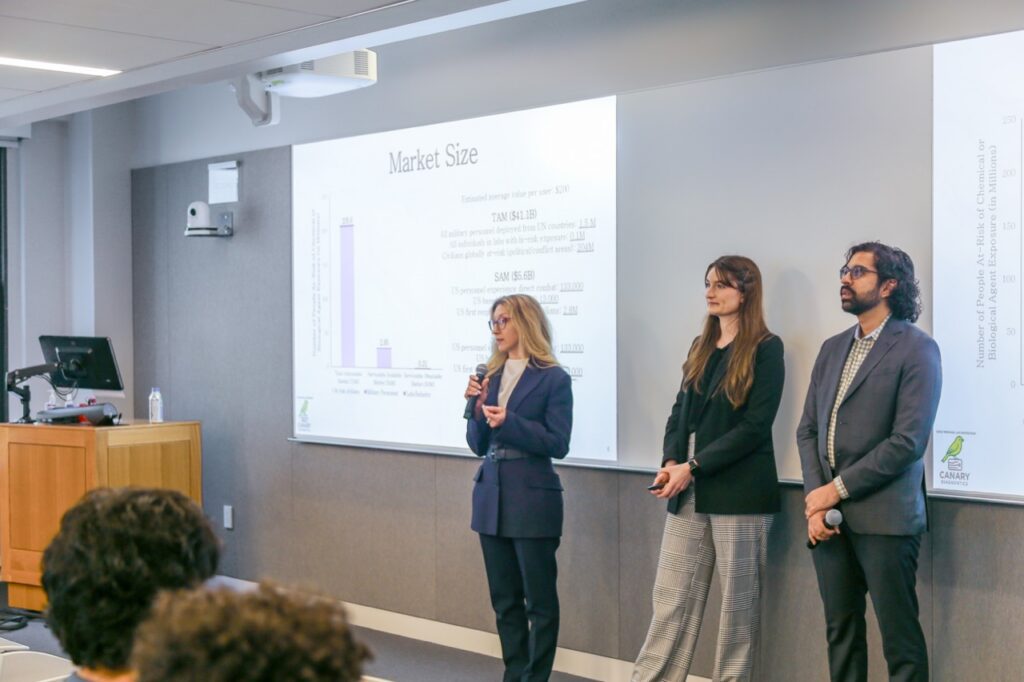
- Canary Diagnostics (Galina Borodulina, MBA/MS ’26; Julia Donlevie, Ph.D. ’28; Vijay Raghunathan, MBA/MS ’26) – real-time biosensors for chemical and biologic threat detection.
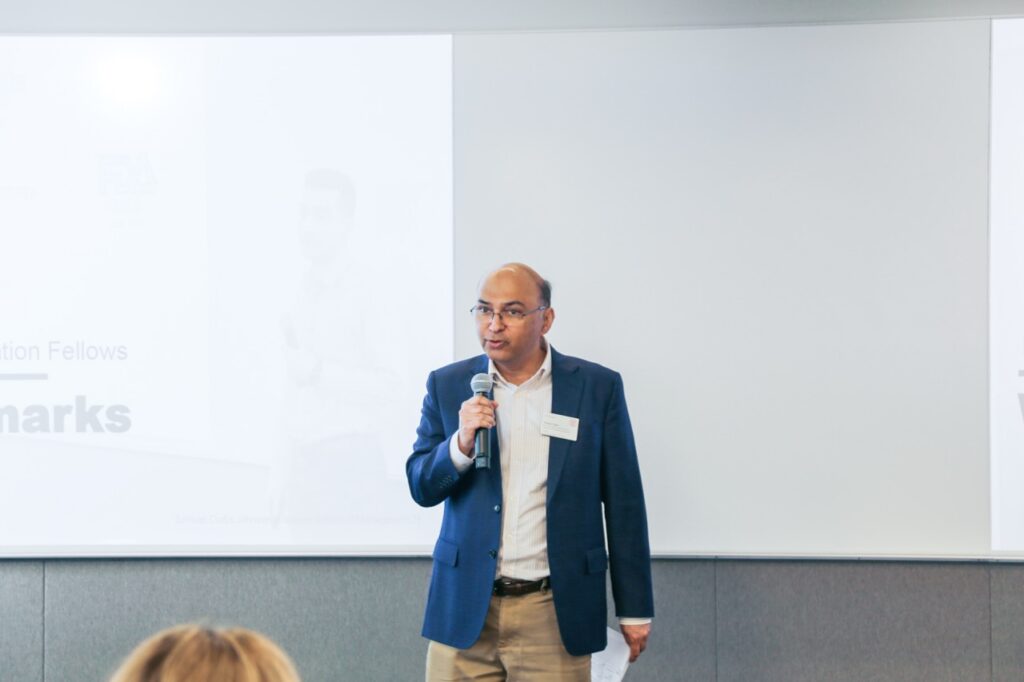
“This program enables MBA students to talk with researchers about how to commercialize technology and how to create startup ventures,” said Vishal Gaur, the Anne and Elmer Lindseth Dean of the Johnson Graduate School of Management. “That is immensely valuable, not just for society, but also for the students who are working together. They’re creating new entrepreneurial ventures and creating muscles in the brain that will be useful in their future careers.”
The Cornell SC Johnson College of Business has offered the LSTIF program, initially known as the BioEntrepreneurship Initiative, since 2022. Since then, 120 fellows have enrolled in the program, resulting in 13 companies founded and 56 graduates hired in the life sciences industry.
“In this program, we’re trying to cultivate entrepreneurial judgment, which is the ability to discern how best to spend your time and deploy your resources as an entrepreneur,” said program director Gregory Ray, Ph.D. ’14. “In the future, when these students have to make tough decisions, they’re going to better prepared than their peer group from any other institution.”
Fellows develop entrepreneurial judgment, learn from expert speakers and mentors, and build their networks through a series of workshops in Ithaca and New York City. This year, sessions took place at various life sciences facilities in the state, including the Ford Center Incubator at Rockefeller University, Cornell’s College of Veterinary Medicine, and BioVenture eLab at Weill Cornell Medicine.
“I am very appreciative of the opportunity to learn alongside MBA and fellow Ph.D. students, as well as from the speakers and advisors who guided us throughout the program,” Donlevie said. “It has equipped me with invaluable skills and sparked a lasting interest in entrepreneurship.”
The LSTIF program is funded by the SC Johnson College and Empire State Development, with support from Sanofi and Entrepreneurship at Cornell, and is administered by Cornell’s Center for Regional Economic Advancement.


